Saturday, September 24, 2011

Remarkable new SAS publication

A close British acquaintance who has long helped me with my research introduced me to this news today: http://www.bbc.co.uk/news/magazine-14952939

It appears that the SAS Regimental Association has seen fit to publish a diary of sorts that was put together by a unnamed member of the SAS, who had experience that seems to date back to the origins of L Detachment. It has been published to mark the 70th anniversary of the founding of the SAS and raise money for the association, and limited copies are available in the Britain for nearly 1,000 pounds (and available only to Her Majesty's Forces and the Special Forces Club at that pric). A range of different editions are available, with the Navigator Edition, signed by the man himself, posting at a handsome £1750.

What a remarkable advance in the history of the Regiment, and the men who served it so well. It's very coincidental that I just finished reading the book, "We Won a War," which details some of the exploits of UK soldiers during the Oman counterinsurgency.

Saturday, April 9, 2011

Sun azimuth tables

It's pretty remarkable that after years of hunting for the azimuth tables required to employ the Howard MkIII Sun Compass purchased about seven years ago, I found a .pdf of them tucked away online.

They are available, free, on a website called archive.org. I had previously purchased at Ebay auction a CD-ROM of what was advertised as sun tables, but the disc was crap and only made my disc drive shudder as though it was going to explode. No joy there.

Today I was looking online at Howard Sun Compass information, and saw an incomplete one for sale on Ebay. Included in the auction was a CD-ROM of the tables (it may have even been the seller who sold the crap copy years ago), and that was where I picked up the title of the book and name of the author.

For too long I had thought that the tables were nothing more than a nondescript government survey office pamphlet. Most people I corresponded with on forums and guestbooks had heard of the tables, but never seen them before.

Alas, the wonder of the internet and Google. I ran a search string using "Davis sun tables" and out churned a number of hits that took me to Amazon and some old book sellers. I did the same back at Ebay and found nothing. Then I added the simple word "download" to my query and found a copy available at the archive site: http://www.archive.org/details/sunstruebearingo00grea

Sometimes, what you are looking for is right under your nose.

Saturday, April 2, 2011


Today represented perhaps the single greatest movement forward with the project, as I had the opportunity to speak with Sadler for approximately an hour, across a long-distance telephone connection to the UK.


Despite his disclaimers that his memory has grown a bit dime, I found him as sharp as ever when he answered the many questions I posed regarding his service with the SAS, and how it was that he came to become a navigator.


It is probably an indicator of his self-effacing manner that he considered himself an amateur at the business of navigating. He did concede that the breed of men who served with the SAS in those formative years, and who serve in current times, have a dash of skill, bravery, and sense of adventure that makes them successful when going up against greater odds.


I'll probably post additional updates and cover some of the topics we discussed, but for now, it's back to the notes for organization and further research.


The embedded picture is from the tour he (by this time a major) was invited on, along with other members of the SAS, of the US in June, 1945. They were touted as heros of the North African and European Campaigns, and rightly so.

Monday, February 28, 2011

More success

I have been on leave from my military duties for some time, and just had the opportunity to log on to the .mil network in order to check my email. As I browsed the new arrivals and deleted ones that were related to my previous billet, I came across one that I misread when I first saw it sitting in my Outlook queue.

"Mike Sadler" were the first words that I took note of, and I continued on to the business of removing others. As I filtered through the remaining new emails a bit more carefully, I realized that I had seen the name of the sender, not the subject line of the email. I opened it quickly and there it was, a reply from Major Mike Sadler himself!

I have yet to reply, but Sadler offered to take a call at my convenience, and apologized for the lack of correspondence, along with the fact that his memory has faded with the 70 years that have passed. The first thing I think I will tell him is that he, of all people, rate privacy and a certain degree of lapse in memory. He has no doubt forgotten more than I will ever know about the subject of navigation.

Friday, February 25, 2011

Departures...

As it often happens in one's career in the military, you leave an organization that meant a lot to you, in terms of many things. Most of them tend to be intangible, like the opportunities to stand on a expanse of virgin sand that has probably not seen a human tread on it before your presence, where you realize that your profession gives meaning to your life.

I recently left what is likely my last light armored reconnaissance battalion for a billet at one of our infantry schools. While I welcome the break from the grind of preparatory training and eventual deployments, I miss the men who make up that fine battalion already. I have had the opportunity to stand on some remarkable patches of dirt and see some amazing things, just as I did with the first LAR battalion I served with from 2002-2005.

One of the captone operations we conducted was a 160 kilometer raid to the Afghanistan-Pakistan border of Bahram Cha, in order to disrupt insurgent cross-border activity and prevent them from using the Bahram Cha bazaar as a hub for the trafficking of drugs, weapons, foreign fighters and other insurgents. The task force assembled to conduct the mission was immense, by just about every measure imaginable, and movement down and back took its toll on men and machine. I've traveled quite a few long stretches in the variants of the Light Armored Vehicle, the Operation Steel Dawn II was no different. Sadly, that will probably be the last time I traverse the battlefield in one of those beautiful vehicles.

Just a few months after I stepped down from that vehicle, I was saying goodbye to my battalion and my commander, a man who allowed me to be the second-in-command that he needed, and to help forge the unit into the fighting force it was capable of becoming. I gave that man a copy of The Barce Raid: The Long Range Desert Group's Greatest Escapade, by Brendan O'Carroll, to commemorate his joining the ranks, so to speak, of the desert raiders. I inscribed a note of thanks for the opportunity to work with him, and shared the link to this blog. A link to video shot by a combat correspondent is here: http://www.dvidshub.net/video/104068/bazaar-raid-bahram-cha-part-1


Monday, January 3, 2011

Progress...

Well, despite receiving a lead on Sadler's proper mailing address, I became otherwise wrapped up in preparation for another deployment, and the information lay dormant for almost a year.
As I was dredging through my email, I pulled up the information again and asked a British acquaintance to give it a check. Turns out that it is accurate, and my friend even had a brief chat! Well how about that?

I've sent a letter off, asking if we might have a chat or two of our own, and I am excited to see what the reply holds.

This post also allows me to add a clarification to my inaugural post. In it I stated the following:

My initial interest in Sadler stemmed from a read of The Phantom Major: The Story of David Stirling and the SAS Regiment, by Virgina Cowles. This interest grew after my reads of various books detailing the exploits of the Long Range Desert Group and their loose affiliation with the SAS before Stirling acquired his own transport. As someone who has languished over a map with sweat dripping from my brow as I plotted the next leg of my course, I wanted to know more about Sadler. I felt the larger historical and military audience would benefit from learning how Sadler learned to navigate, what standard operating procedures he observed, and how he applied his craft in the harsh conditions of the blistering sands.
I was browsing through John W. Gordon's book "The Other Desert War: British Special Forces in North Africa, 1940-1943" today, and was reminded that there was no loose affiliation involved, but rather a fairly well-formed, close relationship. My previous statement was thoroughly incorrect.

Saturday, September 25, 2010

I am reminded of my interest in land navigation...

When I was just a young boy, one of my favorite books was Treasure Island, by Robert Loius Stevenson. I can faintly remember my deep interest in the nature of the treasure map that sits centerpiece to the story, and the unique landmarks such as Spyglass Hill. I must have studied that map easily one hundred times as I read the book several times, or simply thumbed to the map to daydream about piracy and treasure.

The Mike Sadler Project is a passion for me because I have always enjoyed the challenge of terrestrial navigation. I have found the business of plotting a location on a map, charting a course to that point, and the following that azimuth to a destination, a fairly easy process. Perhaps it is because of my early interest in Treasure Island. In any case, this ease and enjoyment has been part of the impetus behind the The Mike Sadler Project, and the attempt to highlight his uncanny skill at traversing hundreds of kilometers with confidence and skill.

This effort remains on track. Is is a slow track, but this project continues on. Once my post-deployment leave kicks off, I hope to move further along than I am now. Wish me luck!

Sunday, September 13, 2009

Another tidbit arrives

I was reminded today about the utility of maintaining this blog, as a European visitor and collector of LRDG/SAS insignia and other memorabilia wrote to me via email.

We exchanged several emails across the day, and he shared some interesting facts with me regarding Sadler. It seems that this visitor has corresponded closely with Jonathan Pittaway, co-author of "LRDG Rhodesia". I've corresponded with Pittaway as well, and gained some resources in the process.

With luck, this contact will put me closer to finding closure to a number of questions.

I also ran across an Ebay auction for a Howard Sun Compass that offered a copy of azimuth tables that I have been looking for a long time now. Hopefully, I will be able to score a copy of that, even though it only covers 30 deg N to 30 deg S in latitude.

Today's research drifting also came across a posting on Military Photos.net from Kuno Gross. he seems to have come across a working replica of a Bagnold Sun Compass, so now I am on the hunt to see if he has information regarding his source. Hmmm, an interesting day indeed.

Saturday, August 22, 2009

Additional photo


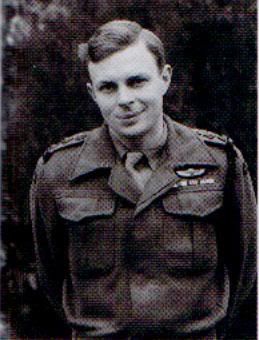
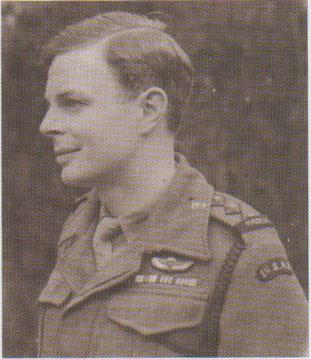
This picture seems to have been taken in a sequence that included the title page photo of Sadler. An acquaintance recently commented that he was a handsome fellow, and I suppose that yes, he is in indeed. Herehe wears the rank insignia of a captain, denoted by the three pips found on his epaulets.

Friday, May 15, 2009


I am currently doing a bit of pleasure reading, and Steven Pressfield's novel Killing Rommel: A Novel is on my nightstand for the time being. It is a good portrayal of both the Long Range Desert Group and the Special Air Service during the N. African Campaign, albeit in the midst of a fictionalized mission to kill one Field Marshal Erwin Rommel as he and the Afrika Korps threatened to sweep into Alexandria Cairo unless his successes were curtailed.
My background knowlwedge of both of these formations makes for a very enjoyable read of this mission, and Pressfield brings the characters to life in a manner I could only hope to do with the book.
And on that practical note, I am beginning to think that the final product is going to have to remain devoid of attempts to highlight te mystique of those early members of the SAS, and simply focus on the hard facts and accomplishments. A tall order indeed!
In any event, the book gets a thumbs-up for folks with a interest in WW II history, because it is indeed very historically accurate.

Tuesday, April 28, 2009

Re-booting this project

Well, I just returned from a deployment to Iraq, and look forward to getting this project back on track.

Not much was done while I was gone. I dabbled with a few readings and thought at length about the flow of what I want to write, but right now I have to start the business of organizing the tons of research notes I have compiled.

I intend to weave that effort in with my professional military education coursework I also have opened right now.

Sunday, April 6, 2008

First Editions

I have a weakness for old books, and even though I don't have many, the ones I do own are certainly prized possessions.

I just won a 1945 first edition of Long Range Desert Group: The Story of Its Work 1940-1943, by W.B. Kennedy Shaw. "Sometime Intelligence and Topographical Officer, L.R.D.G." It will have an honored spot on the shelf.

Monday, March 31, 2008

Iconic photographs


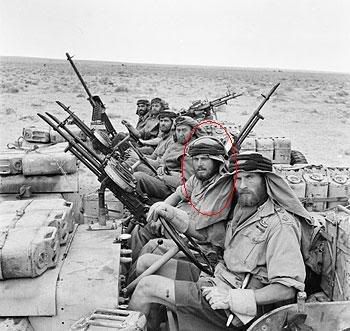
I am currently trying to determine if the soldier highlighted in the well-known picture above is Mike Sadler. Any confirmation available, as well as the names of the other gentlemen in the photograph? I understand that Lieutenant Macdonald is driver of the closest Willy jeep.


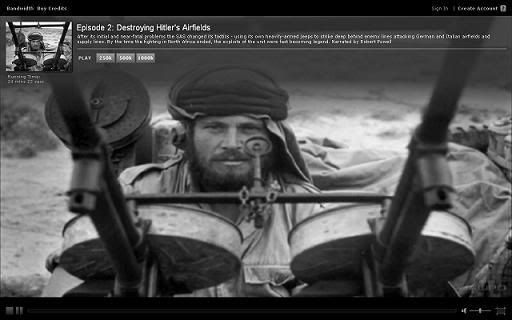
Another photo at the very top, shot from a different angle in what are a serious of posed photos, offers a closer view, but I still cannot be certain.

Monday, March 24, 2008

LRDG Training Notes

The past month has been slow. Not as much writing as I'd like, and actually more work and research as I read through several books I picked up following a scrub of other bibliographies.

In order to take a break, but continue to make progress to some degree, I decided to start working on the effort to re-type and digitize the copy of the LRDG Training Notes that I acquired from Jack Valenti. In current military terms, the document is closer to a standard operating procedures text or Aide-mémoire, which would be utilized by units to formalize actions, procedures, and techniques during operations.

This effort alone may take another month, since I want to maintain the formatting of the original document, and I've never been too savvy at maximizing the potential of MS Word.

Monday, February 25, 2008

Looking for the source of my evasion silk map


As you can see from the picture above, I procured a silk map some time ago through an online auction. I'd like to determine the year it was made, to confirm whether the auction description is accurate (it refered to it as a US aircrew evasion map of 1943-vintage). Has anyone out there seen something similar, and knows the genealogy?

Sunday, February 10, 2008

Book reviews

It has been a slow couple of weeks for the project. I've spent the majority of the free time available just thinking about random issues and working on drafts of the outline I have so far. One thing I have been pretty aggressive on is reading as many book reviews as I can get my hands on, with an eye towards ones written on military history books. They serve as an excellent gauge for me on the path I think the outline needs to take. Each review has to be taken with a grain of salt, but they are rather illuminating nonetheless.

Tuesday, January 29, 2008

Theodolite procedures?

I neglected to mention in the "Quest for sources" post that I am also in dire need of a WWII-vintage copy of instructions for manipulating a theodolite. Even better would be an example of a period of instruction that may have been given to LRDG navigators of that era.

Although the equipment has changed significantly, surveying principles have not, so I believe that readers would gain significant insight from how a navigator like Sadler achieved his plot accuracy.

Sunday, January 27, 2008

Maxwell replies

Well, I received a brief reply from Mr. Maxwell today. He is away for the moment and promises to reply in more detail later in the week.

I am hopeful that my query made sense, as it was just a quick email sent out as the thoughts struck me. Maxwell's reference to Sadler's achievements as "legendary" was motivating!

Wednesday, January 23, 2008

Rare gems

I happened to come across the blogger website of Kit Constable Maxwell at http://kitmax.blogspot.com/ and his posts are fascinating to read, considering he retraced so many of the routes travelled by well-knowns from the ranks of the LRDG. He is next on my list to contact, as I have a keen interest in a file posted to his blog. I hope he can point me to the actual map.

The matter of the LRDG Training Notes makes me wonder if there were ever similar operating procedures put to paper for the early formations on the SAS. As with earlier posts, if anyone happens to drift by here and knows of a source, I would be in your debt.

Monday, January 21, 2008

And then there was film...

As I went through my notes today, I recalled that founders (well, at least Stirling) of the SAS granted interviews that were recorded on film. In the days of youtube, one would hope that a snippet of two have found there way there, but I haven't had luck tracking any clps down.

If for any reason you happen to know where said interviews may reside today, I definitely need an azimuth to them!